printer's devil
(/ˈprɪn.tərz ˈdɛv.əl/)
noun
-
(historical) a person, typically a young boy serving as an apprentice, who ran errands in a printing office
Rewriting Vintage Fashion
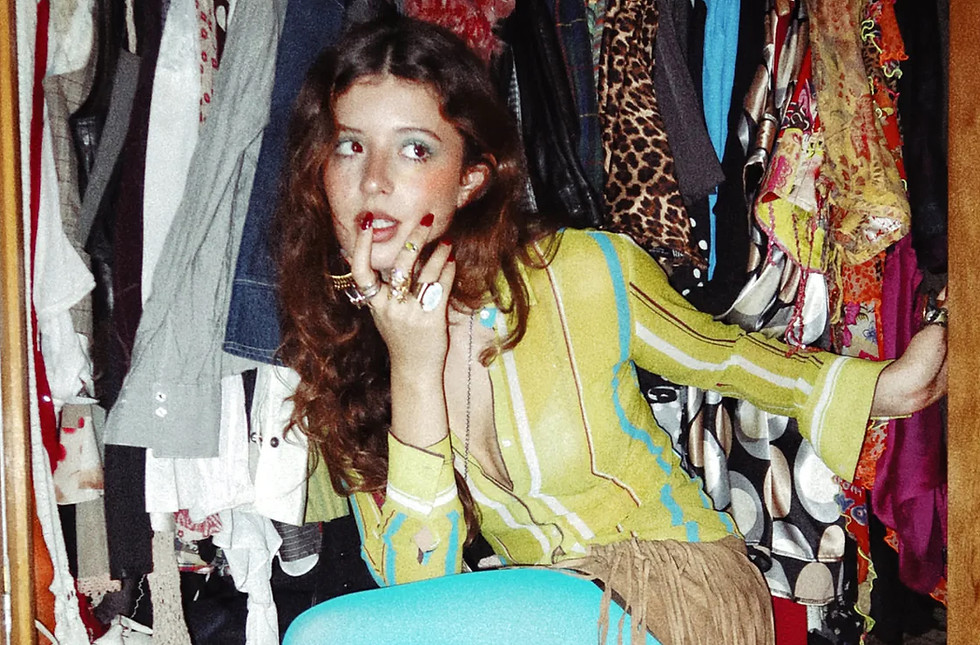
Gen Z isn’t simply bringing back vintage fashion – they are rewriting it.
Package Deal No Longer:
Vintage is having a moment. But Gen Z isn't bringing back fashion exactly as it was. They are taking it apart. Rather than copying and pasting the aesthetics of previous generations — the vibrant, “more is more” excess of the ’80s, for example - post-millennials are mixing references across decades, treating vintage shoes, jackets and handbags as individual components rather than complete looks.
The recent revival of Isabel Marant’s ‘wedge trainer’, paired seamlessly with a set of everyday straight-leg jeans and cheap tank top found in your local charity shop, is a pretty neat example of how the Gen Z wardrobe lives outside chronology. Fashion becomes non-linear; the deliberate inaccuracy of combining a 2010 designer shoe with a 2026 basic £40 jean, creates a kind of love affair between the early 2000s and present day. Time, at least sartorially, loses its order.
Previous fashion revivals often had a recognisable aesthetic, arriving as a package: the free-spirited ‘70s came back, then the eclectic ‘80s, followed by the more minimalistic ‘90s, then playful Y2K era. Gen Z's relationship with vintage feels different because the decades are no longer being revived as complete packages. A 2000s shoe doesn't have to come with a 2000s outfit. A ‘70s leather jacket doesn't require flares, and a ‘90s leather shoulder bag doesn't mean you're trying to look like the 1990s.
Fake Nostalgia:
Fake nostalgia is nostalgia detached from memory, and has become an aesthetic in its own right, and this interpretation of fashion is where it lives. Integrating vintage clothes into their everyday outfits allows Gen Z to feel nostalgic for periods they never actually experienced. The explanation may lie in the ever-expanding digital empire, ruled by TikTok, Pinterest and Instagram. These platforms allow Gen Z to encounter fashion history not as something distant, but as something constantly resurfacing. Scrolling through visual archives of previous decades now takes nothing more than a quick and easy swipe. A teenager born in the 2000s can watch a video of Carla Bruni’s 1992 Versace catwalk, discover a second-hand Fendi baguette bag on Vinted, or binge old episodes of Sex and The City, all in the same afternoon. The past becomes searchable, scrollable and, crucially, wearable.
Immediately vintage fashion becomes less about recreating a personal past and more about constructing an imagined one. This is why Gen Z feels so comfortable mixing clothes from different eras. Lacking any personal attachment from a specific decade means a piece can be removed from its original context and given an entirely new one – completely guilt free.
The Internet Wardrobe
Past eras and styles act as fashion's very own scaffolding, but the internet has collapsed that history into one giant wardrobe — and with it, Gen Z's fashion references have become less chronological and more algorithmic. Images sit beside one another online without any obvious hierarchy; the algorithm doesn't care that they are thirty years apart, so why should the person who is getting dressed? The history of a garment becomes secondary to how it can be styled now.
Perhaps the most significant change is that vintage no longer needs to be worn authentically. Instead, it becomes a reference point. Past fashion crazes are sampled rather than replicated, sometimes to the simplicity of an 80’s buckle belt worked into an otherwise contemporary outfit. A pair of Y2K sunglasses can nod towards the early 2000s without requiring a low-rise Juicy Couture velour tracksuit and a tiny crop top.
Fashion has always been cyclical, but Gen Z may have disrupted the cycle itself. Rather than waiting for one decade to disappear before another returns, they have made the entire history of fashion available at once. The result is a wardrobe that does not belong to any one year, decade or aesthetic. It belongs to today. It belongs to now.
Vintage Officially Rewritten:
This is why Gen Z’s relationship with vintage feels so different. They are not attempting to recreate the past accurately, nor are they necessarily nostalgic for a time they remember. They are taking fragments of fashion history and giving them new meaning. The ’80s buckle belt, the ’90s leather bag or the 2000s wedge trainer can all exist together without needing to tell the same story. So, perhaps Gen Z isn't bringing vintage fashion back at all. They are doing something more interesting: taking fashion out of its timeline and rewriting it in their own.
Photo from Flair Magazine